The Mission Company
Self-funded venture · Founder, UX and Systems Designer · 2024
Role
Founder, UX & Systems Designer
Org type
Self-funded venture
Timeline
2024
Methods
Framework design, design sprint
Outcome
3 youth camp tracks launched; homeschooling software built and in testing
The problem
The Mission Company was built as a “breaking broken systems” venture spanning gig-economy market research, youth education camps, and homeschooling software: three connected workstreams under one customer-flow model that moves from community education, through an accelerator and consulting arm, into a full-service agency offering.
Four connected workstreams
Each explores a different way to build what's missing. Select a workstream to open the project, key metrics, and technical appendix.
1. The Founders Economy: Research and Category Development4 stakeholder tiers · 12 role categories mapped
Diagnosis
Organizations and individuals transitioning into the gig economy had no unified framework. Research existed in fragments (which roles transition first, what individual freelancers need to succeed, what agencies versus gig arrangements actually cost an organization) with no single map connecting individual, company, and federal and state-level needs to each other.
Intervention
Built The Founders Economy, a four-tier framework (Individual, Current Companies, Federal and State, New Agencies) mapping the platforms, education, collaboration structures, and third-party support needed at each level. Paired it with practical tools: a personal-brand build-and-measure guide, a personal SWOT framework for team-building, a projected-challenges-and-solutions matrix for the gig transition, and an early-adopters targeting model identifying which organizations would move first based on industry and brand characteristics.
Technical appendix
Research and Methodology
Synthesized gig-economy adoption patterns and organizational-transition research into one comparative four-tier model, cross-referenced against role-transition data across creative, technical, consulting, and administrative categories.
Scoring and Logic
Not applicable. This is a stakeholder framework and taxonomy, not a scored assessment.
Constraints and Assumptions
The framework is at the design-sprint and partnership-seeking stage rather than field-tested at scale. Different sections carry different build status: some are built and looking for a partner, others are still in a design sprint.
Obstacles Encountered
Translating abstract stakeholder needs (belonging, trust, culture) into concrete deliverables usable by all four tiers at once, rather than writing four separate frameworks that didn't talk to each other.
2. Youth Education Camps3 concurrent camp tracks · flat $70 per camper
Diagnosis
Students in 3rd through 8th grade needed accessible programming that built practical skills outside standard after-school offerings. Most existing options tackled emotional development, entrepreneurship, or team-based confidence separately, never together, and rarely at a price accessible to most families.
Intervention
First offered a Design Sprint camp, which drew no signups. Then designed and launched three parallel weekly camp tracks under one shared operational system: Confidence Unlocked (socio-emotional play and individuality development), Entrepreneurs Accelerator (building a business from concept through funding and market strategy), and a Cheer Team track (team-based physical and social confidence-building). All camps were designed for students in 3rd through 8th grade and offered as an after-school camp and a summer camp at the Jewish Community Center (JCC), at a flat $70-per-camper rate through one shared registration system. The purpose of the camps was to test market entry and market adoption and to build awareness.
Technical appendix
Research and Methodology
Programming was designed around three distinct developmental needs (emotional regulation, entrepreneurial thinking, and team and physical confidence) and run in parallel rather than in sequence to reach different interest groups at once.
Scoring and Logic
Not applicable. This is program design and operations, not a scored assessment.
Constraints and Assumptions
A single shared registration form and phone line served all three tracks to keep overhead low for a new program.
Obstacles Encountered
Running three distinct curricula at once on a lean team required standardizing the registration and marketing system before any of the content could scale.
3. Children's Homeschooling SoftwareBuilt in Obsidian · daily lessons, journaling, and project storage in one vault
Diagnosis
Homeschooling families teaching entrepreneurship alongside spiritual and emotional growth had no single place to plan a day's lessons, track a child's own reflection, and keep their projects together over time. Lesson planning, journaling, and project work were scattered across separate tools rather than living in one structure a child could return to.
Intervention
Built a homeschooling curriculum system inside Obsidian. Each day opens with a daily quote, a vocabulary word, and thoughtful review questions, then moves into the day's major lesson, a skill to practice, and a video to watch. Each day is also a journal entry with checklists so the child documents what they worked on, and every project the child builds is stored in the same vault rather than scattered across separate tools. Using the Dataview plugin, a parent can pull up metrics on the student's education and habits, supporting wellness, time management, and compliance reporting to homeschooling organizations.
Technical appendix
Research and Methodology
Designed around entrepreneurship education paired with spiritual and emotional growth, using a daily structure rather than a fixed curriculum calendar.
Scoring and Logic
Not applicable. This is a curriculum and journaling system, not a scored assessment.
Constraints and Assumptions
Built in Obsidian, so it assumes a household comfortable installing and navigating a note-taking application rather than a dedicated app or web portal.
Obstacles Encountered
Keeping daily lesson content, personal journaling, and long-running projects in one coherent structure without the vault becoming difficult for a child to navigate on their own.
4. The Think Tank Crew: Kids Video CurriculumExtends the homeschool software · 4 series · 42 lessons at three age levels
Diagnosis
The homeschool software gave learners structured journals and projects, but children ages 8 to 12 still needed an engaging way into skills most curricula treat separately: friendship, emotional regulation, entrepreneurship and fair trading. Time young people spend in person with friends fell from about 150 minutes a day in 2003 to 40 minutes in 2020, while employers rank teamwork, problem-solving and communication among the first skills they look for. Parents, homeschool families and teachers had few short, story-based resources that taught these skills together and gave the adult a ready way to continue the lesson.
Intervention
Extended the homeschool curriculum into The Think Tank Crew, a made-for-kids YouTube channel with companion guides. Children watch short animated stories; the adult uses a free guide to discuss, practice and act out each lesson in 5 to 10 minutes. Designed four series with distinct animal casts in one shared school world: The Entrepreneurs (an eight-step problem-to-solution path adapted from the Entrepreneurs Accelerator camp), Journeys (27-day quests with two milestones and daily actions), Foundations (calm-down, identity, boundary and planning skills rebuilt for children) and The Trading Post (value, quality checks, fair-trade questions, services, the ask and repeat trading). Wrote every lesson at three levels, from ages 8 to 12 through high school, so one skill can follow a learner from grade 3 to grade 12. Built the production pipeline with AI video and voice tools, automated private uploads and a weekly human review before anything is published.
Technical appendix
Research and Methodology
Grounded in the U.S. Surgeon General's 2023 advisory on social connection, a meta-analysis of 213 school-based social and emotional learning studies (270,034 students; an 11-percentile-point gain in academic achievement), NACE Job Outlook 2026 employer skill priorities, and Gallup data showing 43% of students in grades 5 to 12 plan to start a business.
Scoring and Logic
Two-week pilot pass signals: under one hour of creator time per short, above 60% of short viewers staying to the end, above 30% average view duration on long-form, and zero policy flags.
Constraints and Assumptions
The made-for-kids setting turns off comments, notifications and personalized ads, so guides and lesson order live on a separate web page. YouTube reviews mass-produced AI content at the channel level, so each video varies its story structure and passes a full human review before publishing. No personal data is collected from children.
Obstacles Encountered
Keeping twelve animated characters visually consistent across AI-generated videos while giving each series its own identity, solved by launching one series at a time so only three leads are in production at once, and sharing a supporting cast across series.
Project visuals
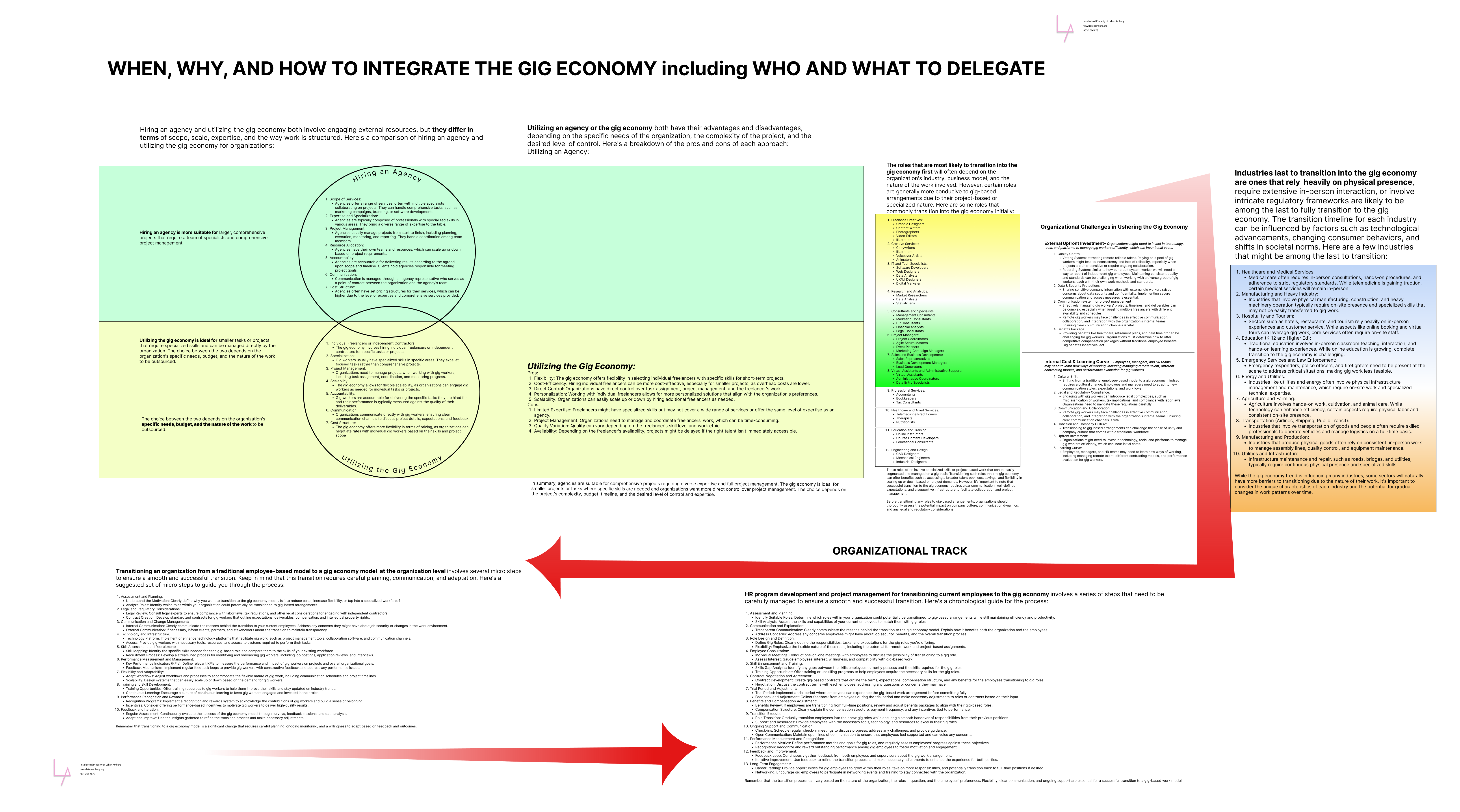
Gig economy integration framework
Market research into the gig economy showed how independent workers find, keep, and grow work. The framework shaped the accelerator and consulting arm of The Mission Company’s customer flow.
Click the image to enlarge
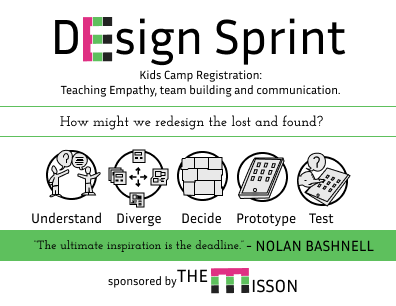
Design Sprint youth camp
The customer flow begins with community education. The Design Sprint camp teaches students in 3rd through 8th grade to solve problems the way product teams do.
Click the image to enlarge